Global Warming: What’s Really Going On?
Global warming is mainly known as a natural process that keeps the Earth’s surface warm — but over the last two centuries, it’s gotten out of hand.
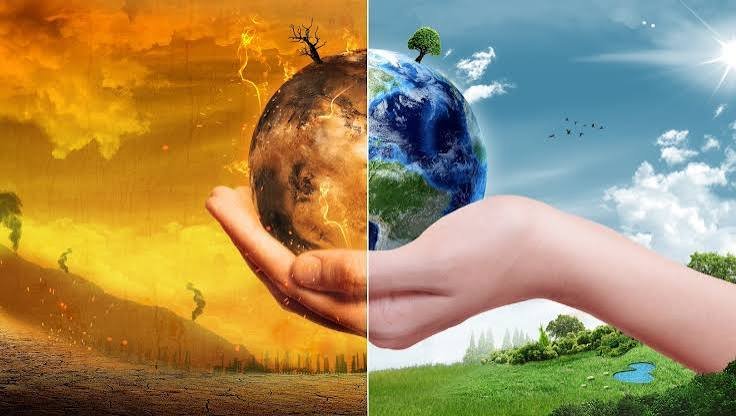
In simple terms, global warming is the gradual rise in the planet’s average temperature over time. Most scientific studies and climate reports agree that human activity is speeding this up, causing problems in the atmosphere and rising sea levels as the polar ice caps melt.
The main (and most trusted) source of information on global warming is the Intergovernmental Panel on Climate Change (IPCC), a body linked to the United Nations (UN).
A Century of Rising Heat
According to the IPCC, the 20th century was the hottest on record, with global temperatures climbing by an average of 0.7°C. Estimates suggest this trend is continuing into our own century — and that’s sparked huge debates about what should be done. Spoiler: there’s no single fix. The solutions have to happen on a global scale.
To put this in perspective, back in March 2014 the IPCC released a report warning that global warming could become extremely serious and irreversible — leading to rising oceans, crop losses, and a whole range of disasters tied to how radically our climate (and how we use natural resources) is changing.
What’s Causing It?
Most experts agree the main driver is the emission of so-called greenhouse gases (carbon dioxide and methane). This is actually a natural effect, but it’s been supercharged by industry, vehicles, fossil fuel burning, livestock farming, and other human activities pumping out pollutants at an ever-growing rate.
Effects and Consequences
The knock-on effects reach deep into the planet’s social and physical structure:
- Warmer oceans, which speed up the melting of polar ice caps
- Possible flooding of coastal areas and cities as sea levels rise
- More intense sunlight and solar radiation, linked to the growing hole in the ozone layer
- More extreme weather events — irregular rainfall, droughts, hurricanes, tornadoes, and other hard-to-predict phenomena
- Species extinction, as the minimum conditions needed for survival disappear