
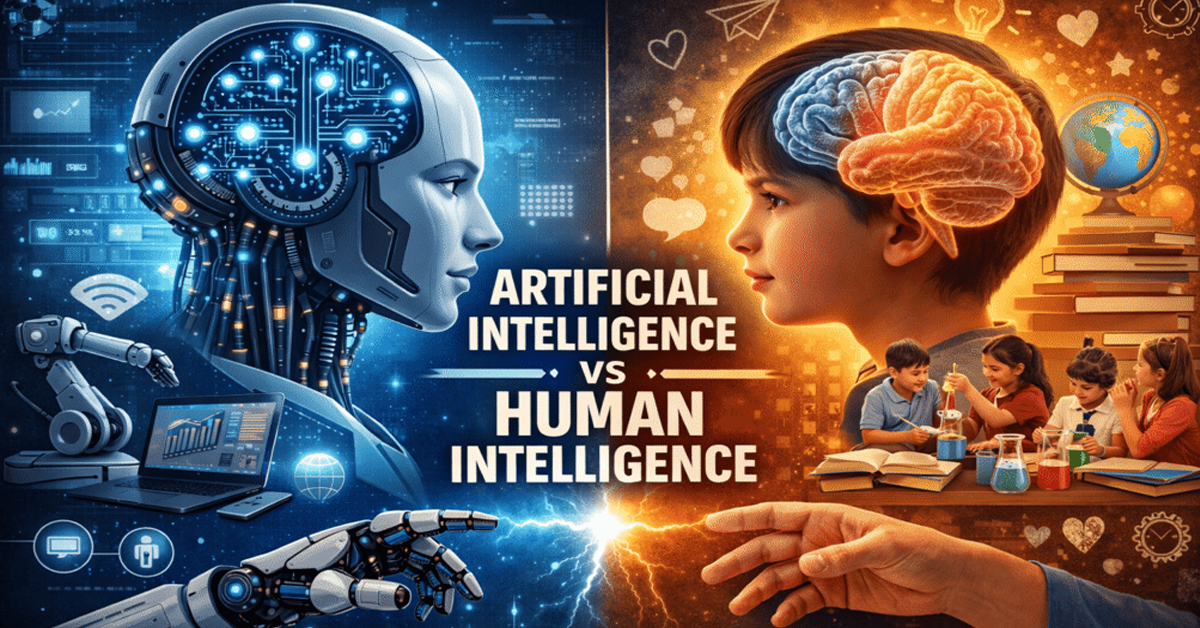
Artificial intelligence is becoming more and more a part of everyday reality, yet many people still aren’t quite sure what it actually means — or how this technological shift is impacting daily life.
That’s why we’re breaking down the concept and definition of Artificial Intelligence, and taking a closer look at a topic that’s evolving fast.
Broadly speaking, artificial intelligence is a branch of computer science research focused on developing mechanisms or devices that simulate human reasoning and thought. In a sense, it’s technology designed to mimic human characteristics.
These are scientific efforts aimed at creating devices that replicate human thinking (and even behavior) as closely as possible, within all its complexity — enabling analysis, reasoning, and even understanding what’s being communicated, so it can respond appropriately across a wide range of situations.
One of the biggest challenges — and one of the field’s main goals — is creating devices that can learn and evolve, much like humans do. That means they wouldn’t be built for just one specific purpose, but designed to solve a wide range of problems through continuous self-development.
Research in this area keeps advancing, turning what once felt like science fiction into something increasingly real and common in everyday life. Naturally, that also sparks plenty of debate.
The Benefits AI Can Bring
AI has the potential to bring major benefits to the world — especially because it can learn complex things more easily and uncover solutions that humans haven’t been able to find yet.
These range from medical breakthroughs — like potential cures for current diseases — to solutions across countless other fields.
After all, AI’s biggest advantage is that it doesn’t need to rest, eat, or have a social life like humans do. That means it can dedicate itself entirely to learning and finding solutions across every subject imaginable.
It can also perform complex tasks with far fewer execution errors.
That’s exactly why research in this field is so highly valued. Still, there are ethical concerns and ongoing debates on the topic — since AI’s unpredictability makes people understandably nervous about where it could lead.
Concerns Surrounding Artificial Intelligence
One of the biggest fears is that AI could become so powerful — learning across so many domains — that it becomes incomprehensible to humans.
Another concern involves the possibility of these systems eventually turning against humans, viewing us as a threat and finding ways to eliminate us.
As much as this may sound like science fiction, it’s a real concern researchers are already starting to take seriously. After all, if there’s even a possibility, it’s worth figuring out how to prevent it.
That said, it’s worth noting that research keeps moving forward, and as new technologies emerge, AI becomes an increasingly common part of daily life.
While there’s no guarantee it’ll unfold exactly as imagined, we’re already seeing gradual changes — especially with devices capable of interacting meaningfully with people and helping with everyday tasks.
These technologies are already present, for example, in smartphones through voice control features. It feels like the beginning of something we don’t fully understand yet, but that we’re actively working to develop.
So regardless of some people’s concerns, research into Artificial Intelligence should keep moving full steam ahead — and we can expect plenty of exciting developments as time goes on and technology continues to advance.